Last April, something happened that is considered one of the largest power system collapses in Europe in the past 20 years. In a matter of seconds, Spain lost around 60 percent of its generation, leaving Spain and Portugal without electricity for more than ten hours.
The event raised an entirely legitimate question: just how stable is our grid, and could something similar happen in Slovenia, too?
Who Looks After Slovenia’s Grid?
Slovenia’s electricity grid operates on two levels:
- the transmission grid is operated by ELES, the country’s sole transmission system operator;
- the distribution grid, which delivers electricity to homes and businesses, is maintained by five regional companies: Elektro Ljubljana, Elektro Maribor, Elektro Celje, Elektro Primorska, and Elektro Gorenjska.
Why Is Slovenia’s Grid Stable?
Slovenia’s electricity grid is relatively stable thanks to three key pillars.
1. Strong Integration into Europe
Slovenia’s transmission grid is connected to neighboring countries through high-voltage power lines. ELES is a member of ENTSO-E, the European Network of Transmission System Operators for Electricity, which enables synchronous operation and mutual balancing across the European electricity system.
If an outage or imbalance occurs in one part of the system, neighboring transmission networks can help regulate frequency and voltage.
2. Diverse Generation
Slovenia gets its electricity from nuclear power, primarily the Krško Nuclear Power Plant, as well as hydropower plants, thermal power plants, and an increasing share of solar and other renewable sources.
The diversity of generation sources reduces dependence on any single type of electricity production.
3. Active System Management and Investment
The system operator continuously maintains the grid frequency at around 50 Hz, provides regulating reserves, and balances deviations between electricity generation and consumption.
ELES has also been investing intensively in the robustness of the transmission grid for more than a decade and a half. The resilience of the transmission system was demonstrated during this year’s severe snowstorm, when the transmission grid suffered no physical damage despite extremely demanding conditions.
Could the Same Scenario Happen in Slovenia?
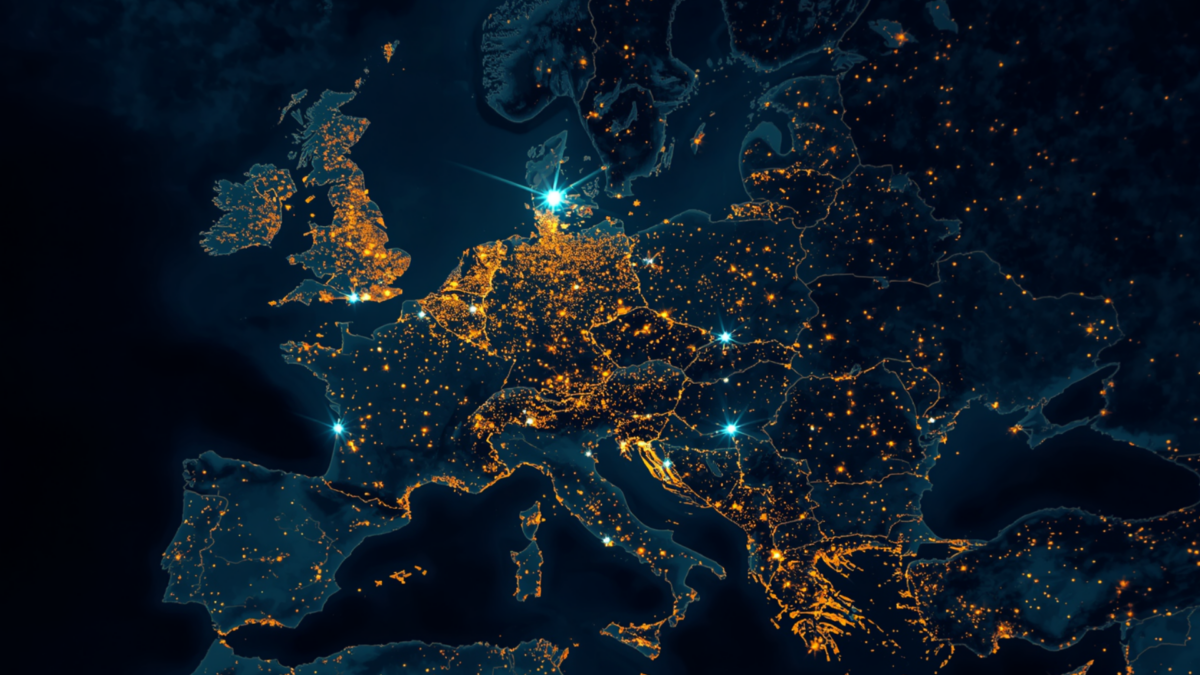
An identical scenario is significantly less likely in Slovenia, precisely because of the country’s strong connection to the wider European electricity system. Slovenia is not an energy island.
But that does not mean the country is without challenges. In Slovenia, some of the biggest challenges are increasingly moving to the local level. The rapid growth of distributed solar generation is one of the factors putting increasing pressure on the distribution grid.
Solar power plants produce most of their electricity around midday, while households typically consume the most in the morning and evening. When many solar installations are connected to the same distribution line, large amounts of surplus electricity can flow back into the grid at the same time on sunny days.
This increases voltage on distribution lines and creates reverse power flows — something the distribution grid was historically not designed for.
That is why electricity experts are paying increasing attention to local solutions that can relieve the distribution grid. This is where solutions emerge that can be beneficial both for your wallet and for the electricity system.
How Can a Battery Storage System Help the Grid?
A battery storage system can address both an economic and a system-level challenge at the same time.
For you: electricity surpluses can be stored and used later in the evening, when you would otherwise have to purchase electricity from the grid. Alternatively, with SunContract, unused surpluses can generate credit — so-called bonus surplus — that can be used to reduce your electricity bill.
For the grid: a battery storage system can smooth out the midday peak in electricity fed into the grid and reduce reverse power flows.
Smart energy management can strengthen this effect even further. The SunContract system uses artificial intelligence and advanced algorithms to analyse electricity prices, weather forecasts, expected generation and consumption, and network-charge time blocks every few minutes.
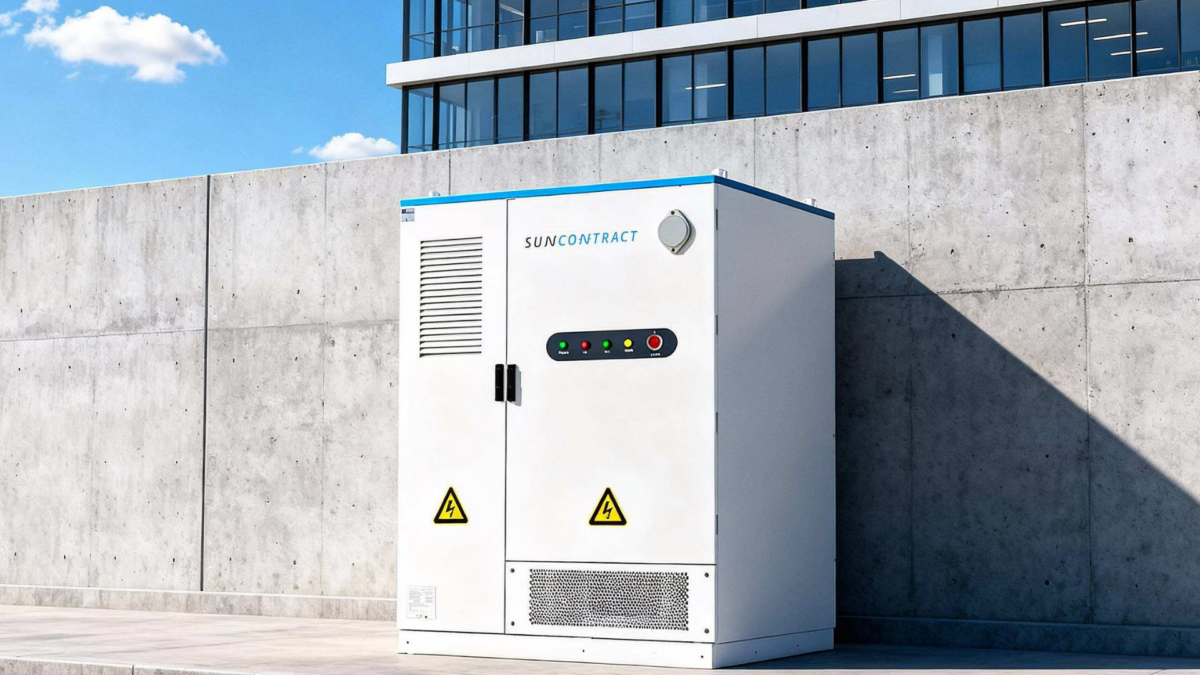
Depending on the selected management mode, the system can then determine when the battery should charge, discharge, or feed surplus electricity into the grid.
When electricity prices on the market are low or even negative, the battery can charge. During periods of negative prices, this can also generate credit.
Battery storage and smart energy management are therefore not simply add-ons to a solar power plant. They are tools that can contribute to local grid stability.
The Common Thread: Distributed Stability
A solar power plant, a battery storage system, and an energy-sharing marketplace together form what we call distributed stability.
Households, businesses, and communities become active participants in maintaining balance in the electricity system rather than simply passive consumers.
The Iberian blackout was a reminder that grid stability cannot be taken for granted.
Slovenia is in a strong position thanks to its close integration with the European electricity system. But the more electricity can be consumed close to where it is generated, the less pressure is placed on the grid.
That is why the future is not only about building more power plants. It is increasingly about smarter energy management, local energy use, energy sharing, and electricity storage.