
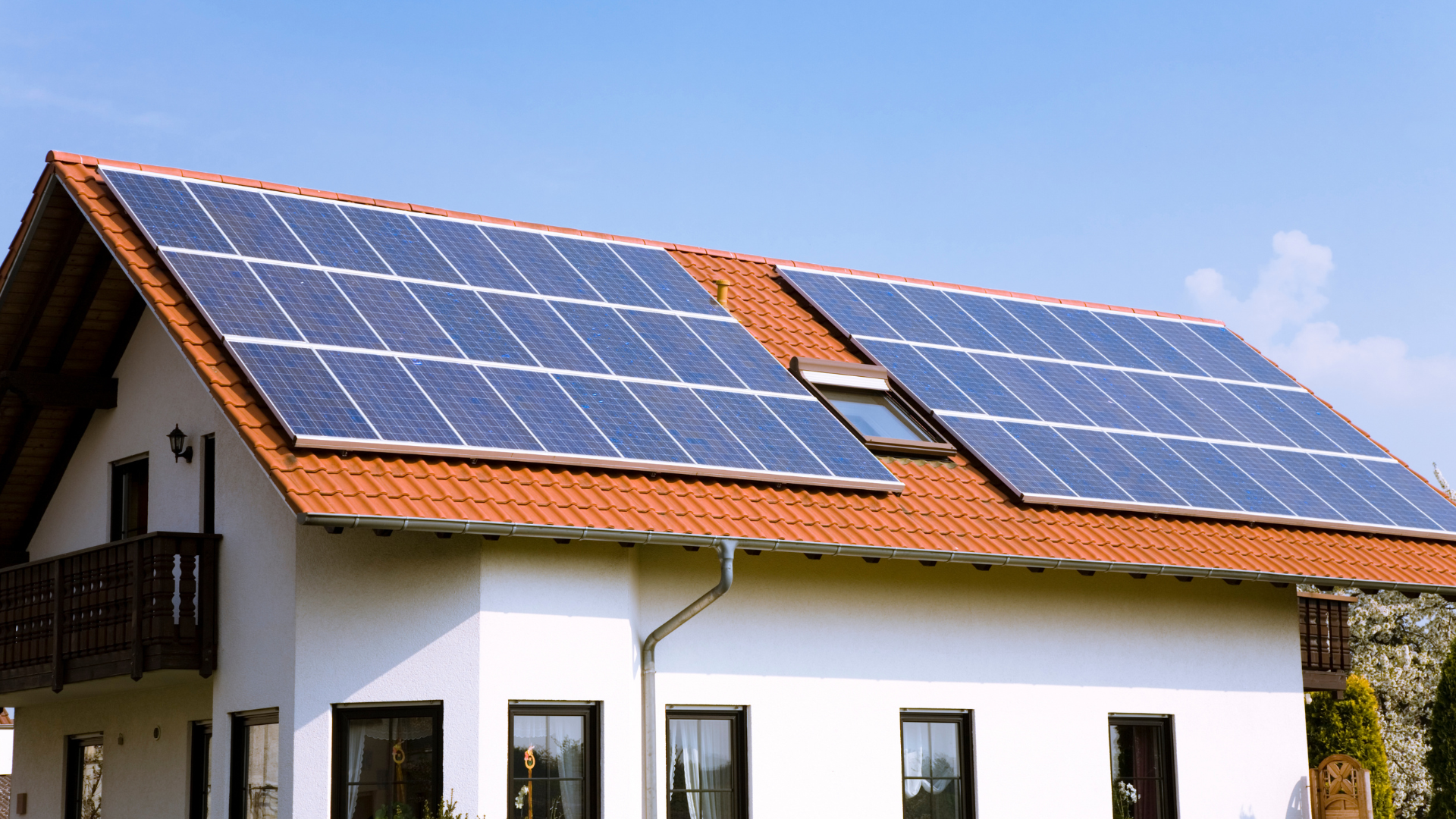
On paper, it looks simple: panels on the roof and a battery. Yet two seemingly identical systems can deliver very different results by the end of the year. The difference is not in the equipment — it’s what happens to your energy.
A solar power plant and a battery storage system are an increasingly common choice for Slovenian households and businesses. But two systems with the same panel output and the same battery capacity are not necessarily equally profitable. The key question is not how much equipment you have, but how smartly you know how to use it.
A battery is not just storage; it can be a tool.
In a conventional system, the battery performs a single task: storing the energy you produce during the day so you can use it in the evening. That is useful, but that is also all it does.
The SunContract system goes a step further. With smart management, the battery turns into a profit-generating tool. It stores energy and actively manages it so you can squeeze more out of it. With the help of artificial intelligence and advanced algorithms, it analyzes the market price of electricity, the weather forecast, expected generation and consumption, and the battery’s capacity every few minutes.
Based on this data, the system decides on its own when to charge, when to discharge, and when to feed surpluses into the grid. And all of this is tailored to you and to the management mode you choose.
Where the difference lies
| Conventional system | SunContract system |
|---|---|
| The battery stores energy for later use. | The system stores energy and actively manages it, so you get more out of it. |
| Mostly ignores movements in the market price of electricity. | Tracks electricity market prices and helps pick a better moment to consume or feed in energy. |
| Does not track the weather or expected generation. | Takes the weather forecast into account with a resolution of up to 3 kilometers, and thereby the plant’s expected generation. |
| Surpluses are often fed in under less favorable terms. | Surpluses can be turned into credit (bonus surplus) for later use, such as a lower monthly electricity bill. |
| Summer surpluses do not help with winter costs. | Summer (bonus) surpluses help cover costs for months to come. |
| The focus is on the equipment: panels + battery. | The focus is on the result: lower costs, better utilization, and a faster payback period. |
Why high-quality smart management matters so much today
The market price of electricity changes every 15 minutes. This means that every interval has the potential for savings or losses. A conventional system largely overlooks this and consumes or imports energy regardless of whether the moment is favorable.

A special phenomenon is negative prices, which occur when generation (mainly from solar power plants) exceeds consumption. In such periods, with SunContract smart management, you pay only network charges, levies, excise duty, and VAT, and you can also generate bonus surpluses that lower your future bill.
The smart system automatically recognizes and takes advantage of the best moment, depending on your chosen management mode: it can charge the battery when electricity is cheapest (or negative) and save it for when it is most expensive.
Summer surpluses that help in winter
One of the biggest differences shows up over the course of the year. With the conventional approach, summer surpluses often go unused or are fed in at less favorable terms. With SunContract, surpluses are valued as carryforward credit. The summer sun helps cover your costs even in the months when the plant produces less.
You can use the credit to pay for electricity, the network charge, excise duty, levies, and VAT, which means you can bring the monthly bill down to as low as 0 euros. Any unused credit carries over into the next period.
Choose the mode that suits you
Because goals differ, households and businesses can choose their own management mode: from maximum economic benefit (the highest savings), through self-sufficiency with surplus feed-in (a balance between self-consumption and feed-in), to maximum self-sufficiency (the greatest possible independence from the grid).
Focus on the result, not the equipment
In the end, what matters is not only how many panels are on the roof or how large the battery is. What matters is the result: lower costs, better utilization, and a faster payback period. This is exactly where the value of a smart upgrade shows — the same equipment, with smart management, does considerably more for you.